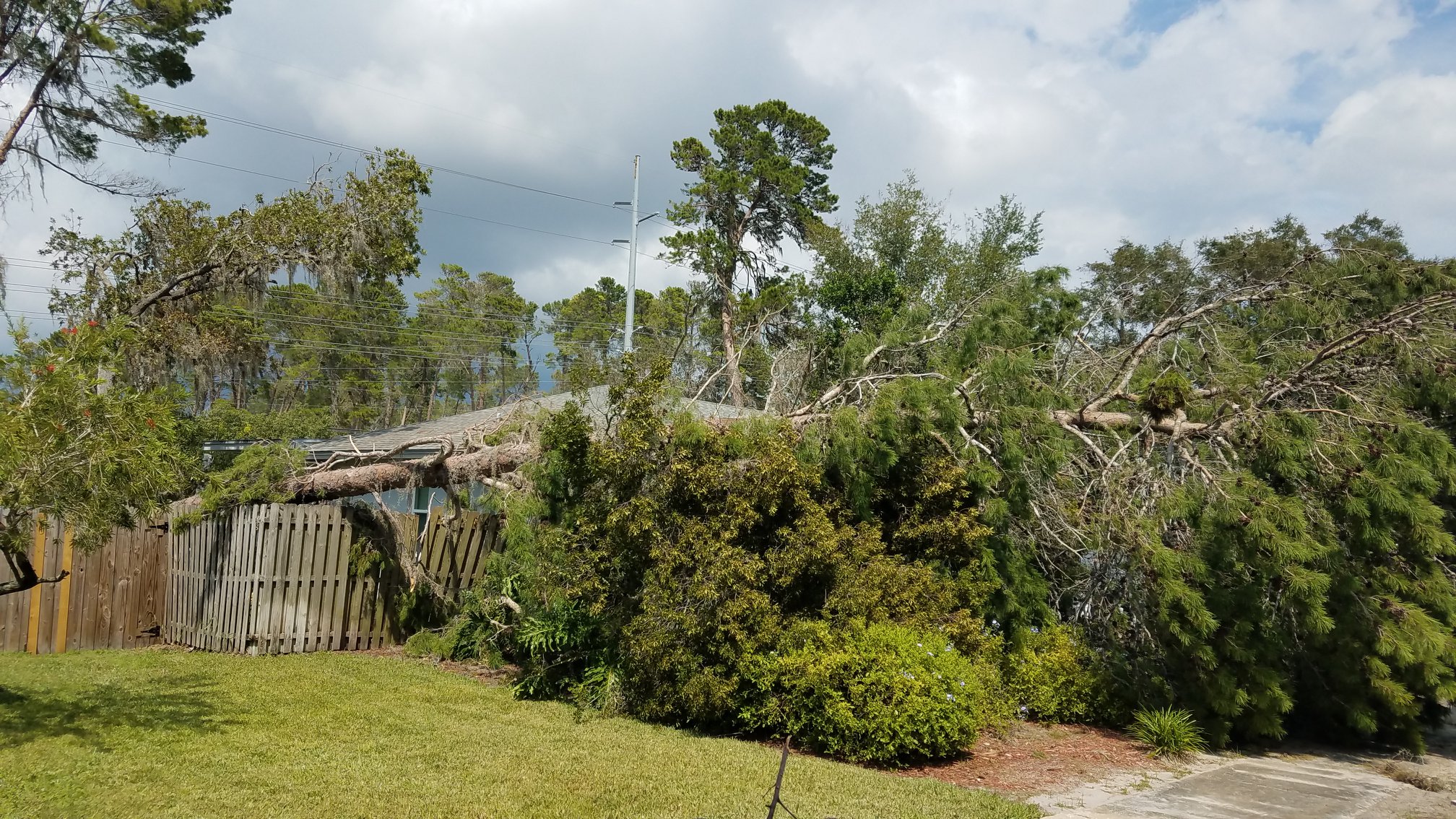
Hurricane season is already underway, and it’s easy to assume the tree in your yard will hold up like it always has. But trees don’t fail all at once. They give you warnings first: a new lean, a hidden crack, a branch that’s been hanging on longer than it should. The problem is knowing what you’re looking at before the wind decides for you.
Forecasters expect the 2026 Atlantic hurricane season to run close to average this year, with NOAA’s outlook calling for anywhere from eight to fourteen named storms and up to three reaching major hurricane strength. That’s not a season to shrug off. A below average forecast still doesn’t tell you which storm hits your street, and it only takes one to turn a weak tree into an expensive problem.
The good news: hazardous trees almost always show warning signs before they fail. Below, we’ll walk through the five signs that mean it’s time to call for emergency tree service, why storm season makes weak trees worse, and exactly what to do the moment you spot one.
Why Do Trees That “Looked Fine” Suddenly Become Hazards?
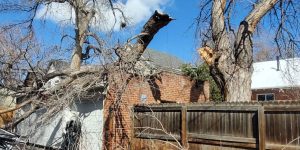
A tree doesn’t fall over just because the wind picked up. It falls because something underneath, the roots, the trunk, a major limb, was already weakened, and the storm was simply the last straw. Cracks widen. Roots loosen in saturated soil. Decay spreads a little further with every heavy rain. None of that is visible from your front porch, which is exactly why so many healthy looking trees end up on someone’s roof.
That pattern tends to repeat across a full storm season. Trees typically don’t fail without a reason. An existing defect like decay, poor branch structure, or root damage is usually what causes a limb or trunk to give way, and Michigan State University Extension notes that a tree which loses a major limb in one storm can become unbalanced and more prone to failing in the next one. It’s part of why proactive inspection matters as much as emergency response. The tree that made it through last month’s storm may already be primed to fail in the next one.
What Are the Warning Signs a Tree Needs Emergency Attention?
Most hazardous trees don’t look dangerous at first glance. They look like the same tree that’s been in your yard for years. Here’s what to actually check for.
Sudden or Worsening Lean
A tree that’s leaned the same way for a decade is usually fine. That’s just how it grew. A tree that leans more than it did last month is not fine. A new or increasing tilt often means the root plate is lifting out of the ground on one side, and that’s a sign the whole tree could go down, roots and all, rather than just losing a limb.
Cracks or Splits in the Trunk
Vertical cracks, splits, or areas where the bark has pulled away all point to structural damage below the surface. Once the trunk is compromised, the entire tree becomes unstable, and there’s often no visible warning before it fails completely. A crack that looks minor from a distance can be the difference between a tree that holds and one that doesn’t.
Dead or Hanging Branches
Dead wood breaks unpredictably, even in a light breeze. Branches that got knocked loose in a past storm but are still caught in the canopy, sometimes called “hangers” or “widowmakers,” are just as risky. They can come down without warning, especially once the wind picks back up, and they’re one of the more commonly overlooked hazards after a storm has already passed through.
Root Damage and Soil Heaving
Saturated soil, flooding, and heavy wind all loosen roots. If you notice the ground lifting or cracking near the base of a tree, that’s often the clearest sign the root system is already failing. This one’s easy to miss because the canopy above can still look green and healthy while the foundation underneath is coming apart.
For a closer look at what storm damage looks like on your own property, our post on identifying storm damage on your trees breaks it down in more detail.
Is It Safe to Handle a Hazardous Tree Yourself?
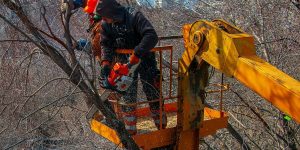
No. This one’s simple. A leaning, cracked, or storm damaged tree can shift or fall with almost no warning, and a chainsaw doesn’t change that risk. It adds to it. Add a branch resting on a power line or your roof, and you’ve got two hazards instead of one.
If a tree is anywhere near a utility line, treat the line as live no matter what it looks like. Even a line that appears dead or disconnected should be left alone until the utility company confirms it’s safe. Removing a hazardous tree safely takes the right equipment, rigging, and training, not a ladder and good intentions. That’s not a corner worth cutting to save a few dollars, especially when the cost of an emergency crew is almost always less than the cost of an injury or a second round of property damage.
What Should You Do the Moment You Spot a Hazard Tree?
- Keep people, pets, and vehicles clear of the area.
- Don’t attempt to climb, cut, or move any part of the tree yourself.
- Note whether the tree is near power lines, your home, or a fence, and mention it when you call.
- Call a licensed tree service for an assessment as soon as you notice the problem, not after the next storm.
Conditions get worse the longer a hazardous tree is left alone, not better.
How Can You Protect Your Property Before the Next Storm?
Catching a problem before it becomes an emergency is always the cheaper option. A yearly inspection focused on structure, not just how the tree looks from the driveway, catches cracks, decay, and root issues while they’re still manageable, instead of after a storm has already made the decision for you.
If you’re in a coastal area like St. Augustine, storm and hurricane proofing is worth budgeting for every season, not just after a scare. That usually means selective pruning to reduce wind resistance in the canopy, removing weak or crossing limbs before they become hazards, and taking a hard look at any tree that’s grown close enough to threaten your roof, fence line, or power service. Our storm and hurricane proofing services are built around exactly this: reducing wind load, removing weak points, and getting your property ready before severe weather arrives, not after.
What Happens When You Call Affordable Tree & Landscape for Emergency Service?
When it’s late at night and a cracking branch or a leaning tree has you worried, you need a team that shows up, not one that makes you wait until morning. That’s the whole point of our emergency tree service: rapid response, ISA Certified Arborists on every job, and no guesswork about what it’s going to cost.
One recent customer put it simply: they had storm damage late at night, and our emergency team showed up within the hour, handling everything safely and keeping them informed the whole way through. That’s the standard we hold every emergency call to, day or night.
We’re licensed, insured, and have been doing this in St. Augustine for 27+ years. What we quote you is what we charge, minus any real surprises we couldn’t have seen coming. No hidden costs, no upselling, just the work done right the first time.
The Bottom Line
A hazardous tree rarely announces itself with a bang. It’s a lean that’s a little worse than last week, a crack you talked yourself out of worrying about, a dead limb you keep meaning to deal with. Catching those signs early is the difference between a routine call and a genuine emergency:
- A worsening lean or trunk crack means the tree’s structure is already compromised.
- Hanging branches and root heaving are easy to miss but just as dangerous.
- Emergency tree removal is never a DIY job, especially near power lines.
If you’re looking at a tree on your property and something feels off, don’t wait for the next storm to make the decision for you. Contact Affordable Tree & Landscape for a professional assessment, and let’s make sure your property is ready before severe weather arrives. No hidden costs, no pressure, just an honest look at what your trees actually need.